
A deadly drug — sometimes in disguise
Introduced more than 50 years ago, pharmaceutical fentanyl is a man-made opioid sometimes prescribed to treat severe and/or chronic pain. But this isn’t the kind of fentanyl you’re hearing about in the news these days. Illicitly manufactured fentanyl, the illegal form of the drug, is up to 50 times stronger than heroin. It’s also believed to be the main reason for the recent spike in opioid overdose deaths in the US.
No one plans to come face to face with a deadly opioid overdose situation, but it happens every day. Be prepared to save a life and carry a life-saving naloxone medication like KLOXXADO® (naloxone HCl) Nasal Spray 8 mg.
Dangers of illicitly manufactured fentanyl
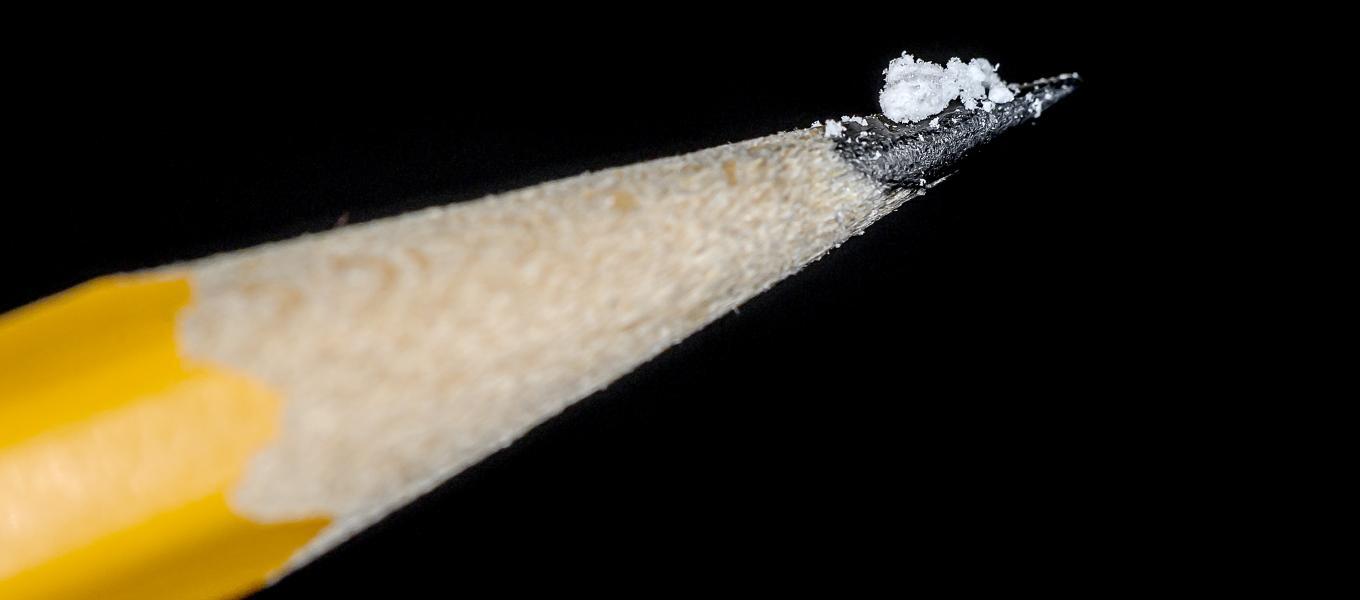
The surge of illicitly manufactured fentanyl flooding this country is driving a lethal new phase of the US opioid epidemic. Just 2 mg of fentanyl – the amount shown in the photos below – has the potential to cause a deadly overdose.
As fatal overdoses reach record-breaking levels, it is important to remember that each one of us has the power to potentially save another person from a deadly fentanyl-related overdose. How? By being prepared for an opioid overdose emergency and carrying a lifesaving naloxone medication like KLOXXADO® (naloxone HCl) Nasal Spray 8 mg.
A lethal dose of illicitly manufactured fentanyl
The images above are used with permission from the United States Drug Enforcement Administration (US DEA).5
Fentanyl contamination
Drug dealers also sometimes mix fentanyl in with other illicit drugs, for example stimulants such as cocaine and methamphetamine, without the user’s knowledge. Some of them do this not only to “stretch” their inventory, but also to create a final product that is more addictive. This means that all illicit drugs could be at risk of being potentially deadly if unknowingly laced with a lethal amount of fentanyl. According to the Centers for Disease Control and Prevention, synthetic opioids like fentanyl contribute to nearly 70% of overdose deaths.
The DEA Laboratory recently found that, of the fentanyl-laced fake prescription pills analyzed in 2022, 6 out of 10 contain a potentially lethal dose of fentanyl.
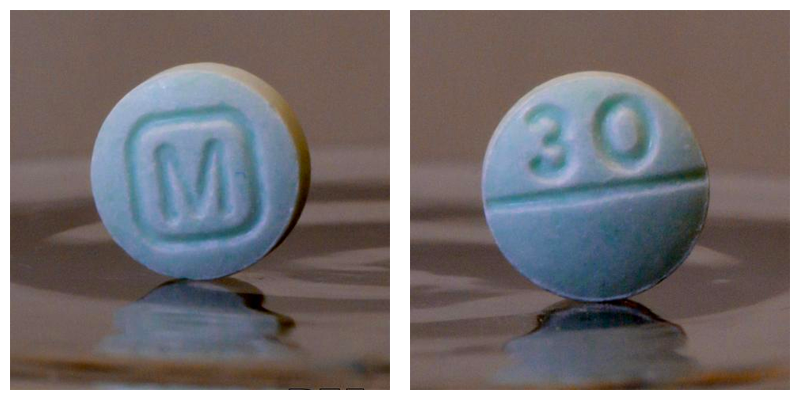
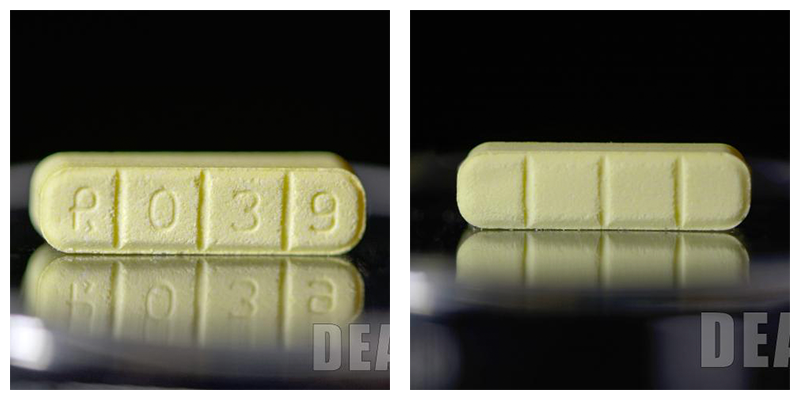
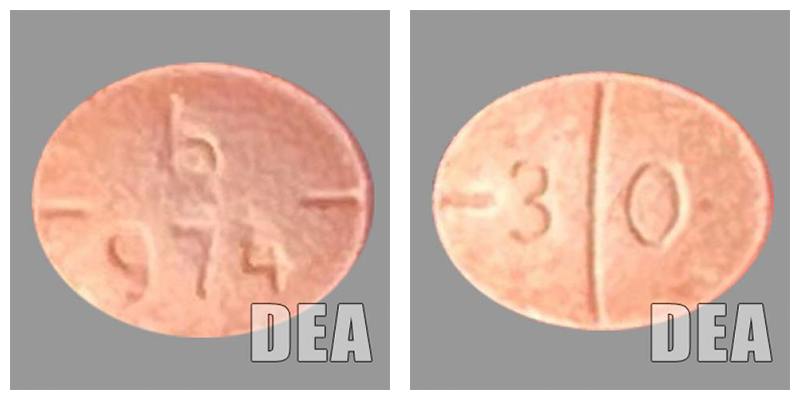
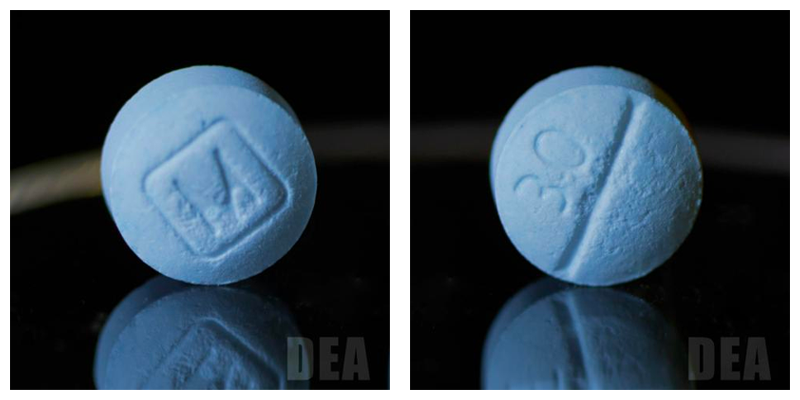
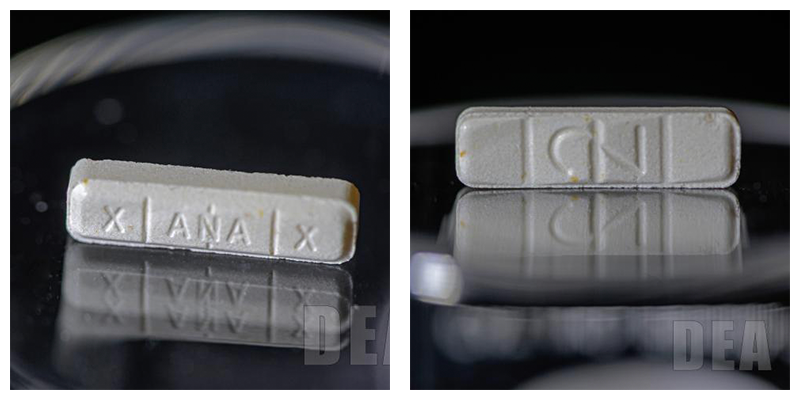
Criminal drug networks are mass producing and distributing “fake pills”—counterfeits of prescription medications that can be laced with fentanyl such as oxycodone (Oxycontin®, Percocet®), hydrocodone (Vicodin®), antianxiety medicines like alprazolam (Xanax®) and stimulants/amphetamines (Adderall®)—with the intention of deceiving the American public.*
Think you can’t be fooled? See if you can tell the difference between the real and counterfeit prescription drugs below.
* All trademarks are the property of their respective owners.
Oxycodone (eg, OxyContin®)
Alprazolam (eg, Xanax®)
Stimulant (eg, Adderall®)
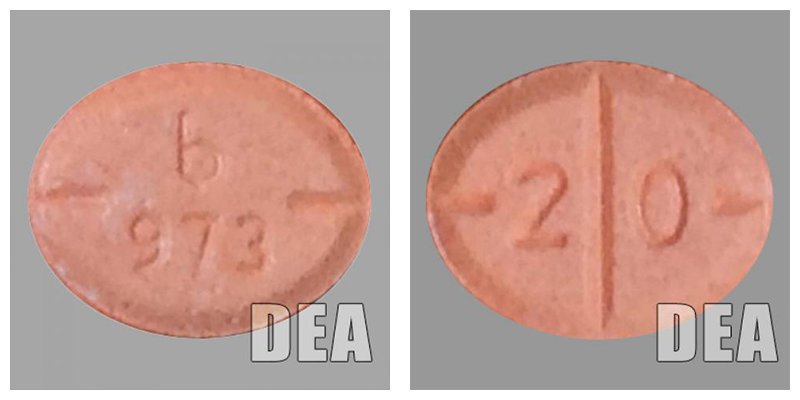
The images above are used with permission from the United States Drug Enforcement Administration (US DEA).7
These are just examples and do not represent the endless varieties of fake pills currently available. Never trust your own eyes to confirm that a pill is legitimate. The only safe medications are those prescribed by your doctor and dispensed by a licensed pharmacy in a container with your name on it.7
The next wave of illicit opioids
Nitazines
Nitazines, a group of dangerous synthetic opioids, can be up to 40 times as potent as fentanyl.13 These benzimidazole-opioid compounds are so strong, they aren’t even approved for medical use.13 Instead, cartels are making nitazines for drug dealers to sell.13 They are sometimes found in combination with other drugs—primarily fentanyl and fentanyl derivatives—but nitazines have also been found in illicit tramadol, cocaine and heroin.13
Fentanyl Analogs
Dealers are also mixing fentanyl-like compounds (often referred to as “fentanyl analogs”) are also being mixed into the illegal drug supply, the most potent of which is carfentanil. Up to 100 times stronger than fentanyl, a deadly dose of carfentanil is just 20 micrograms – or about the size of a snowflake.
But the real danger is that street drugs are commonly contaminated with dangerous amounts of fentanyl analogs like carfentanil, and researchers have found that 60% of all people who tested positive for fentanyl also tested positive for a fentanyl analog.
Fentanyl overdose
Fentanyl is one of the most common drugs involved in overdose deaths. It takes up less space than other opioids (like heroin), so it’s easier to smuggle and transport. You can’t see it, taste it or smell it, so fentanyl contamination in both opioids and non-opioids is virtually impossible to detect. In a recent string of 500 suspected fentanyl poisonings in St. Louis, for example, more than half of the people did not know what they were taking.
Taking an illicit substance without knowing if it contains fentanyl or not is risky, to say the least. Adding to the danger is how quickly fentanyl can cause an overdose.
Risk factors for fentanyl overdose
Anyone taking opioids, including prescription fentanyl, could be at risk for accidental opioid overdose. You may be at a higher risk of accidental fentanyl overdose if you take opioids and:
- Mix fentanyl with other illicit substances, such as benzodiazepines, alcohol, cocaine and methamphetamine
- Have a past history of fentanyl overdose
- Take fentanyl again after a short period of not taking it
- Have low or no tolerance to opioids
- Combine fentanyl with certain prescription drugs, including prescription opioids
- Purchase and use illicitly manufactured fentanyl
- Use a substance that may contain fentanyl without others nearby to intervene, if needed
KLOXXADO® and opioid overdose reversal
Because fentanyl is so powerful, an overdose can set in within minutes or even seconds. As in all cases of opioid overdose, it’s important to reverse the effects of the drug and get the person breathing again as quickly as possible. Average EMS response time in an opioid emergency is 13 minutes, but permanent brain damage can occur after just 4 minutes without oxygen.
During an opioid overdose, every moment matters. If you are concerned about a loved one or have children or teens who might be influenced to experiment with drugs, it’s time to talk about opioids and KLOXXADO®. KLOXXADO® provides an option for 8 mg per spray in a single dose.
Key steps for administering KLOXXADO® Nasal Spray
KLOXXADO® is not a substitute for emergency medical care.
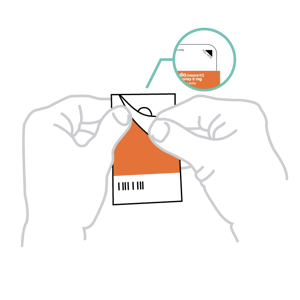
1. REMOVE
Remove KLOXXADO® Nasal Spray from the box. Peel off the back tab with the triangle to open the KLOXXADO® Nasal Spray blister.

2. HOLD
Hold it with your thumb on the bottom and your first and middle fingers on either side of the nozzle.
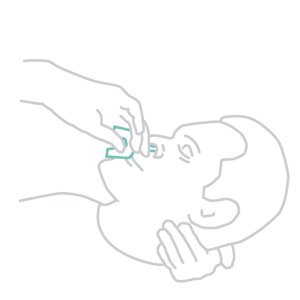
3. INSERT
Insert the tip of the nozzle into one nostril until your fingers are against the bottom of the person’s nose.
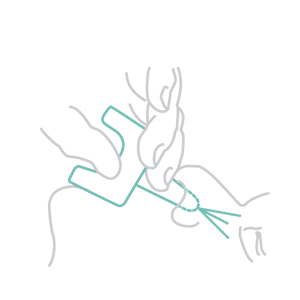
4. PRESS
Press the plunger firmly to give the dose of KLOXXADO® Nasal Spray.
5. CALL 911
After giving KLOXXADO® Nasal Spray to someone, call 911 and stay with them until emergency help arrives.
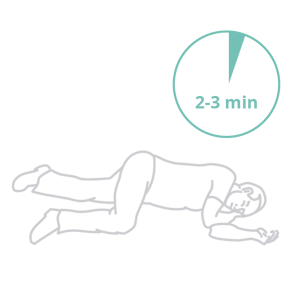
6. ADDITIONAL DOSES
If a person is given KLOXXADO® and does not respond after 2-3 minutes, administer another dose.
If a person responds then overdose symptoms continue, additional doses of KLOXXADO® may be given every 2-3 minutes until emergency medical assistance arrives.
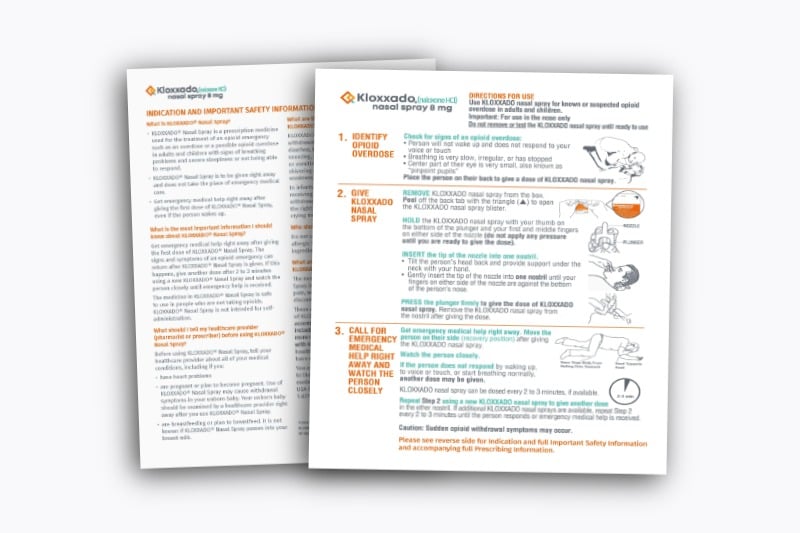
Administrate in accordance with the Quick Instructions.
Use as directed.
KLOXXADO® Quick Use Instructions
Easy-to-follow instructions for administering KLOXXADO®.
Fentanyl and overdose FAQs
What happens if you give KLOXXADO® to someone who is not on opioids?
Naloxone, the medicine in KLOXXADO®, works only if a person has opioids in their system.*† It is safe to use even if opioids aren’t present.† Administering naloxone is unlikely to harm someone, but it could save their life if they are experiencing an opioid overdose.†
* KLOXXADO® (naloxone HCl) Nasal Spray [prescribing information]. Columbus, OH: Hikma Specialty USA Inc., 2021
† Access to Naloxone Can Save a Life During an Opioid Overdose. US Food and Drug Administration website. Available at: https://www.fda.gov/consumers/consumer-updates/access-naloxone-can-save-life-during-opioid-overdose. Accessed March 5, 2023.
Someone I know may be misusing opioids. Where can I learn more?
If you or someone you love is at risk for misusing opioids, resources and help are available. Find information about substance use disorder treatment options on findtreatment.gov, a product of the Substance Abuse and Mental Health Services Administration. Connect with harm reduction resources near you at harmreduction.org, the official website of the National Harm Reduction Coalition.
What are the possible side effects from using KLOXXADO® Nasal Spray?
In two pharmacokinetic (PK) studies of 47 healthy adult volunteers, the following adverse reactions were reported in two subjects each: abdominal pain, asthenia, dizziness, headache, nasal discomfort, and presyncope.
The most common side effects in adults include: stomach-area (abdomen) pain, weakness, dizziness, headache, nose (nasal) discomfort, and a feeling like you are going to faint.*
Serious side effects include sudden opioid withdrawal symptoms. In someone who has been using opioids regularly, opioid withdrawal symptoms can happen suddenly after receiving KLOXXADO® Nasal Spray and may include body aches, diarrhea, increased heart rate, fever, runny nose, sneezing, goose bumps, sweating, yawning, nausea or vomiting, nervousness, restlessness or irritability, shivering or trembling, stomach cramping, weakness, or increased blood pressure.*
For more information, please see the full Prescribing Information and Important Safety Information.
To report an adverse event or product complaint, please contact us at us.hikma@primevigilance.com or call 1-877- 845-0689 or 1-800-962-8364. Adverse events may also be reported to the FDA directly at 1-800-FDA-1088 or www.fda.gov/medwatch.
* KLOXXADO® (naloxone HCl) Nasal Spray [prescribing information]. Columbus, OH: Hikma Specialty USA Inc., 2021
How does KLOXXADO® Nasal Spray work?
Opioids work by attaching to specific receptors found in the brain and in the nervous system.‡ This includes the nerves that sense pain, as well as the nerves that control breathing.† Taking too many opioids can lead to an overdose and that can stop someone from breathing.‡
Naloxone, the active ingredient in KLOXXADO®, stops the opioids from attaching to the receptors on the nerves.* This reverses the effects and symptoms of the overdose.*†
KLOXXADO® Nasal Spray is administered in the nostril and does not require evidence of breathing through the nose during administration.*
Get emergency medical help right away in any case of known or suspected overdose emergency. KLOXXADO® Nasal Spray is not a substitute for emergency medical care.* Administer in accordance with the instructions provided in the KLOXXADO® Quick Instructions resource.
Each device is a single dose.* If an additional dose is needed, you must use another device.*
* KLOXXADO® (naloxone HCl) Nasal Spray [prescribing information]. Columbus, OH: Hikma Specialty USA Inc., 2021.
† NIDA 2021. “Naloxone DrugFacts,” National Institute on Drug Abuse, https://www.drugabuse.gov/publications/drugfacts/naloxone, Accessed May 3, 2021.
‡ White JM & Irvine RJ. 1999, “New Horizons/Mechanisms of fatal opioid overdose,” Addiction, 94(7):961–972.
What is KLOXXADO® (naloxone HCl) Nasal Spray 8 mg?
KLOXXADO® provides an option for 8 mg of naloxone HCl per spray in a single dose.* KLOXXADO® can be used by anyone to reverse the effects of an opioid overdose until medical help arrives.* Each box of KLOXXADO® contains two individually packaged single-spray devices.*
Always carry KLOXXADO® with you in case of an opioid emergency.
* KLOXXADO® (naloxone HCl) Nasal Spray [prescribing information]. Columbus, OH: Hikma Specialty USA Inc., 2021
The Opioid Epidemic
With the spread of illegally-made, synthetic opioids like fentanyl, overdose deaths have grown across ages, races, ethnicities and communities.
Facts About Fentanyl
Extremely potent, illegally-made synthetic opioids such as fentanyl and carfentanil are the most common drugs involved in overdose deaths in the United States.
Understanding Overdose
More than a million Americans will die this decade of an opioid overdose. You could save someone.

Patient and Caregiver Resources
Find product information, as well as opioid addiction and overdose resources.
Important Safety Information and Indication for KLOXXADO® (naloxone HCl) NASAL SPRAY 8 mg
What is the most important information I should know about KLOXXADO® Nasal Spray?
Get emergency medical help right away after giving the first dose of KLOXXADO® Nasal Spray. The signs and symptoms of an opioid emergency can return after KLOXXADO® Nasal Spray is given. If this happens, give another dose after 2 to 3 minutes using a new KLOXXADO® Nasal Spray and watch the person closely until emergency help is received.
Important Safety Information and Indication for KLOXXADO® (naloxone HCl) NASAL SPRAY 8 mg
What is KLOXXADO® Nasal Spray?
- KLOXXADO® Nasal Spray is a prescription medicine used for the treatment of an opioid emergency such as an overdose or a possible opioid overdose in adults and children with signs of breathing problems and severe sleepiness or not being able to respond.
- KLOXXADO® Nasal Spray is to be given right away and does not take the place of emergency medical care.
- Get emergency medical help right away after giving the first dose of KLOXXADO® Nasal Spray, even if the person wakes up.
What is the most important information I should know about KLOXXADO® Nasal Spray?
Get emergency medical help right away after giving the first dose of KLOXXADO® Nasal Spray. The signs and symptoms of an opioid emergency can return after KLOXXADO® Nasal Spray is given. If this happens, give another dose after 2 to 3 minutes using a new KLOXXADO® Nasal Spray and watch the person closely until emergency help is received.
The medicine in KLOXXADO® Nasal Spray is safe to use in people who are not taking opioids. KLOXXADO® Nasal Spray is not intended for self-administration.
What should I tell my healthcare provider (pharmacist or prescriber) before using?
Before using KLOXXADO® Nasal Spray, tell your healthcare provider about all of your medical conditions, including if you:
- have heart problems
- are pregnant or plan to become pregnant. Use of KLOXXADO® Nasal Spray may cause withdrawal symptoms in your unborn baby. Your unborn baby should be examined by a healthcare provider right away after you use KLOXXADO® Nasal Spray.
- are breastfeeding or plan to breastfeed. It is not known if KLOXXADO® Nasal Spray passes into your breast milk.
What are the possible serious side effects of KLOXXADO® Nasal Spray?
KLOXXADO® Nasal Spray may cause sudden opioid withdrawal symptoms including body aches, diarrhea, increased heart rate, fever, runny nose, sneezing, goose bumps, sweating, yawning, nausea or vomiting, nervousness, restlessness or irritability, shivering or trembling, stomach cramping, weakness, and increased blood pressure.
In infants under 4 weeks old who have been receiving opioids regularly, sudden opioid withdrawal may be life-threatening if not treated the right way. Signs and symptoms include seizures, crying more than usual, and increased reflexes.
Who should not use KLOXXADO® Nasal Spray?
Do not use KLOXXADO® Nasal Spray if you are allergic to naloxone hydrochloride or any of the ingredients in KLOXXADO® Nasal Spray.
What are the most common side effects of KLOXXADO® nasal spray?
The most common side effects of KLOXXADO® Nasal Spray in adults include stomach-area (abdomen) pain, weakness, dizziness, headache, nose (nasal) discomfort, and a feeling like you are going to faint.
These are not all of the possible side effects of KLOXXADO® Nasal Spray. Please click here for the accompanying full Prescribing Information, including Patient Information, which includes a more complete discussion of the risks associated with KLOXXADO® Nasal Spray. Always contact your healthcare provider (pharmacist or prescriber) if you have questions or experience any side effects.
You are encouraged to report negative side effects to the FDA at: 1-800-FDA-1088 or www.fda.gov/medwatch. You can also contact Hikma Specialty USA Inc. at: us.hikma@primevigilance.com or call 1-877-845-0689 or 1-800-962-8364.